

CASE STUDY
BIOFEEDBACK THAT WORKS FOR KIDS
A collaborative effort to translate pelvic floor therapy into a safe, at-home experience for children.
A WIDESPREAD BUT OVERLOOKED PROBLEM
At Phase Three Product Development (P3PD), we partner with founders who see gaps in healthcare and have the clarity and courage to build something better. Our collaboration with Juliette Hawa, PT, DPT, founder of PFRx Pelvic Health, exemplifies exactly that.
Juliette is a pediatric pelvic floor physical therapist. Every day in the clinic, she works with children struggling with bladder and bowel dysfunction, conditions that are far more common than most families realize, affecting nearly one in seven school-age children. These challenges can lead to anxiety, social withdrawal, school interruptions, and long-term impacts on confidence and development.
She also saw access as a compounding problem. Families often wait weeks or months for pelvic floor therapy, and even once they begin, there are no child-friendly tools to help kids practice at home between appointments. Clinic-based biofeedback systems are designed for adults, are tethered to expensive equipment, and often feel intimidating for kids.
“There was nothing they could do at home while they waited for care,” Juliette told us. “And for these kids, consistency matters.”
This gap is where PFRx began.
A CLEAR VISION NEEDING ENGINEERING SUPPORT
Juliette’s dream was to transform her clinical prescription program into a safe, easy-to-use home device that could help kids understand and control their pelvic floor muscles. She knew exactly what the therapy needed to accomplish but, as she said with perfect honesty, “Being a pelvic floor therapist, I knew nothing about engineering.”
She explored different development pathways but struggled to find one that offered the multidisciplinary expertise needed to transform a clinical insight into a manufacturable medical device.
She needed a partner who could think with her, not just build what she asked for. She needed a partner to help shape the product in a way that honored the science, the children using it, and the realities of product commercialization.
For Juliette, the match with P3PD became clear. Local proximity meant she could meet with our team frequently, review prototypes in person, and be directly involved in each iteration. As she told us, the ability to “learn the engineering side alongside the Phase Three team” made the partnership feel more like a shared mission than a service relationship.

“Being a pelvic floor therapist, I knew nothing about engineering , so I needed a partner who could turn my clinical prescription program into a real medical device.”
— Juliette Hawa, PT, DPT, Founder & CEO, PFRx
UNDERSTANDING THE PROBLEM, BEFORE ENGINEERING THE SOLUTION
Before we ever touched physical or electronic components, our cross-functional team spent time understanding the underlying clinical science:
How pelvic floor dysfunction is evaluated in children
How biofeedback improves muscle control and mind–body awareness
What kids respond to in therapy
What parents feel capable of managing at home
How clinicians measure progress
Pelvic floor therapy works best when children can visualize their muscle activity, which is something that’s nearly impossible without feedback tools. In the clinic, therapists use electromyography (EMG) sensors, movement cues, and visualization. But at home, families are left without guidance.
Juliette wanted a device that would:
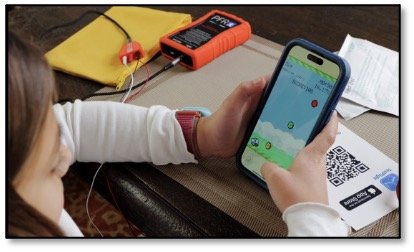
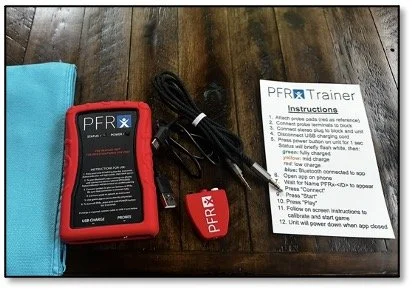
Measure pelvic floor activation safely and accurately using external EMG electrodes
Give real-time feedback in a child-appropriate format
Reinforce the exercises kids learn in PT
Reduce therapy time and help families feel supported between appointments
We translated those clinical requirements into engineering specifications.
“What started as an access problem has evolved into something bigger: reducing PT time, saving families money, and helping kids feel safe doing this work at home.”
— Juliette Hawa, PT, DPT, Founder & CEO, PFRx
OUR APPROACH: TURNING INSIGHT INTO A PROTOTYPE
The PFRx device needed to meet several demanding criteria simultaneously:
Sensitive, Low-Noise Measurement: Children’s pelvic floor activation signals can be subtle and vary widely within and between subjects. We engineered a compact EMG-based pressure-sensing module with strong signal-to-noise performance, ensuring repeatable, clinically meaningful data.
A Form Factor Designed for Kids: Pediatric medical devices must be safe, non-intimidating, and durable. Recognizing that success depends on whether a child feels comfortable and empowered using the device, we considered comfort, size, materials, hygiene, and usability.
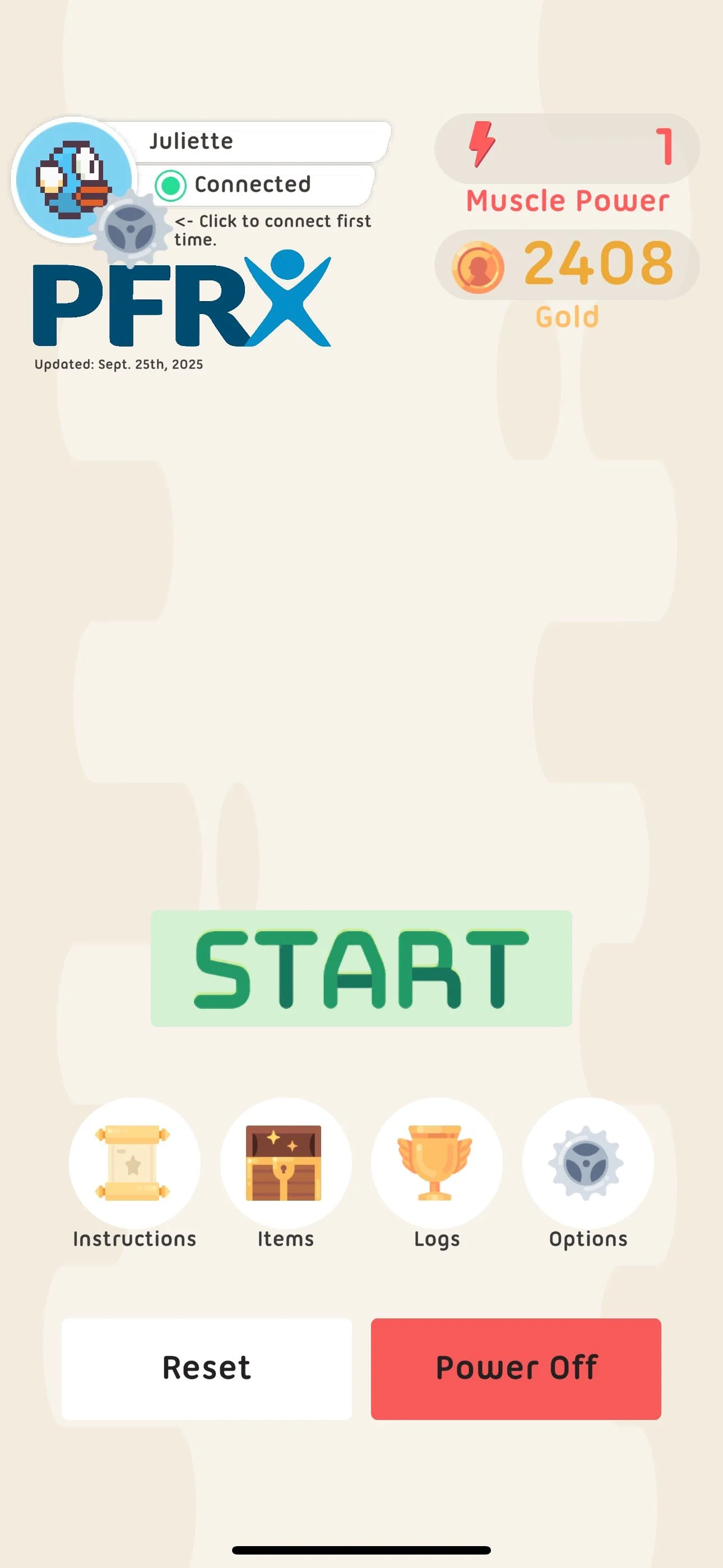
Integration with a Digital Experience: The biofeedback experience is visual. The device needed to communicate wirelessly with a companion app on a smartphone or tablet that could display clear, encouraging, real-time feedback. Gamifying the experience was an obvious choice for kids.
Rapid Prototyping Rooted in Clinical Testing: Multiple versions of the prototype were reviewed with Juliette’s clinical network of fellow therapists, parents, and children. That feedback shaped iterative design at every stage.
We worked through mechanical design, sensor optimization, electronics, firmware, wireless data transfer, app development, and prototype refinement in parallel to ensure each update moved us closer to a device that would perform reliably in the real world.
Throughout development, Juliette remained deeply engaged. “Phase Three treated me like part of the engineering team,” she said. “They didn’t dictate solutions. They brainstormed with me and made sure the device worked the way kids needed it to.”



THE OUTCOME: A PROTOTYPE THAT WORKS
Today, the PFRx biofeedback device is in the advanced prototype phase. Early testing has shown:
Strong performance in signal quality and repeatability
Clear potential to reduce therapy time
High engagement from kids, especially when paired with a gamified app
Relief and empowerment for parents
Enthusiasm from clinicians who see the access gap firsthand
Juliette summed up her reaction in a line that every founder hopes to say, “It’s not often in the medical world that a prototype actually does everything the founder says it does, but this one does.”
The prototype’s accuracy and usability give PFRx a strong foundation for pilot studies, refinement based on user testing, regulatory strategy, and eventual manufacturing scale-up.
“It’s not often in the medical world that a prototype actually does everything the founder says it does, but this one does.”
— Juliette Hawa, PT, DPT, Founder & CEO, PFRx
WHAT’S NEXT FOR PFRX
Several pathways lie ahead for Juliette and PFRx:
Expanding the sensor system to support multiple age groups
Refining app integration to support guided training programs
Preparing for clinical validation studies
Strengthening manufacturing readiness
Exploring reimbursement or clinician-guided distribution models
What started as a mission to improve access is evolving into something much broader: a platform that could help kids develop healthy pelvic habits early in life and prevent long-term complications and reduce healthcare burdens for families.
A COLLABORATION WITH A SHARED PURPOSE
For P3PD, this project represents everything our Colorado-based product development team strives for: combining clinical expertise with multidisciplinary engineering to build devices that improve real lives.
Juliette came to us with a clear need, a real problem, and a vision shaped by years of working with children. Our role was to help her turn that insight into a manufacturable product through engineering, prototyping, collaboration, and honest partnership.
This is what we do best―help founders move from inspiration to commercialization, one meaningful product at a time.

STARTING WITH YOUR INSPIRATION
Phase Three Product Development (P3PD) has simplified the product development process in the life science and medical device industries.
Arthur’s Rock - Fort Collins