CASE STUDY
DESIGN BEFORE YOU ENGINEER
Turning a Functional Prototype into a Clear Product Vision
P3PD’s industrial design sprints help medtech innovators transform functional prototypes into defined product concepts, clarifying usability, architecture, and commercialization direction before detailed engineering begins.
The result isn’t just a rendering. It's a conceptual product visualization grounded in real engineering thinking.
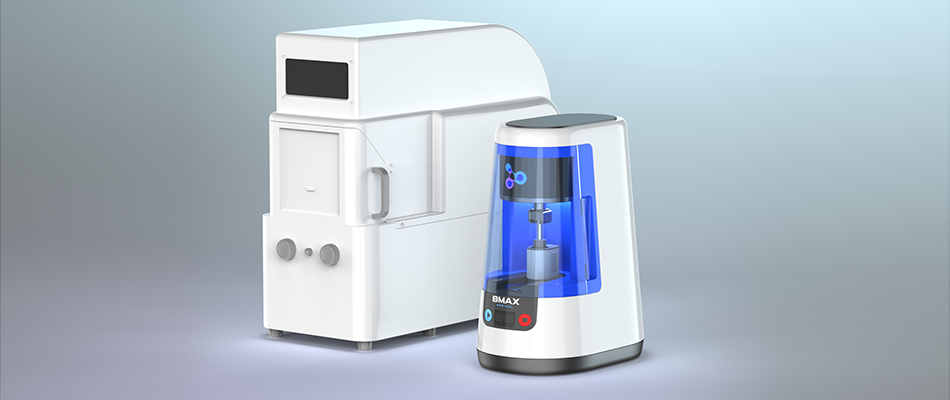
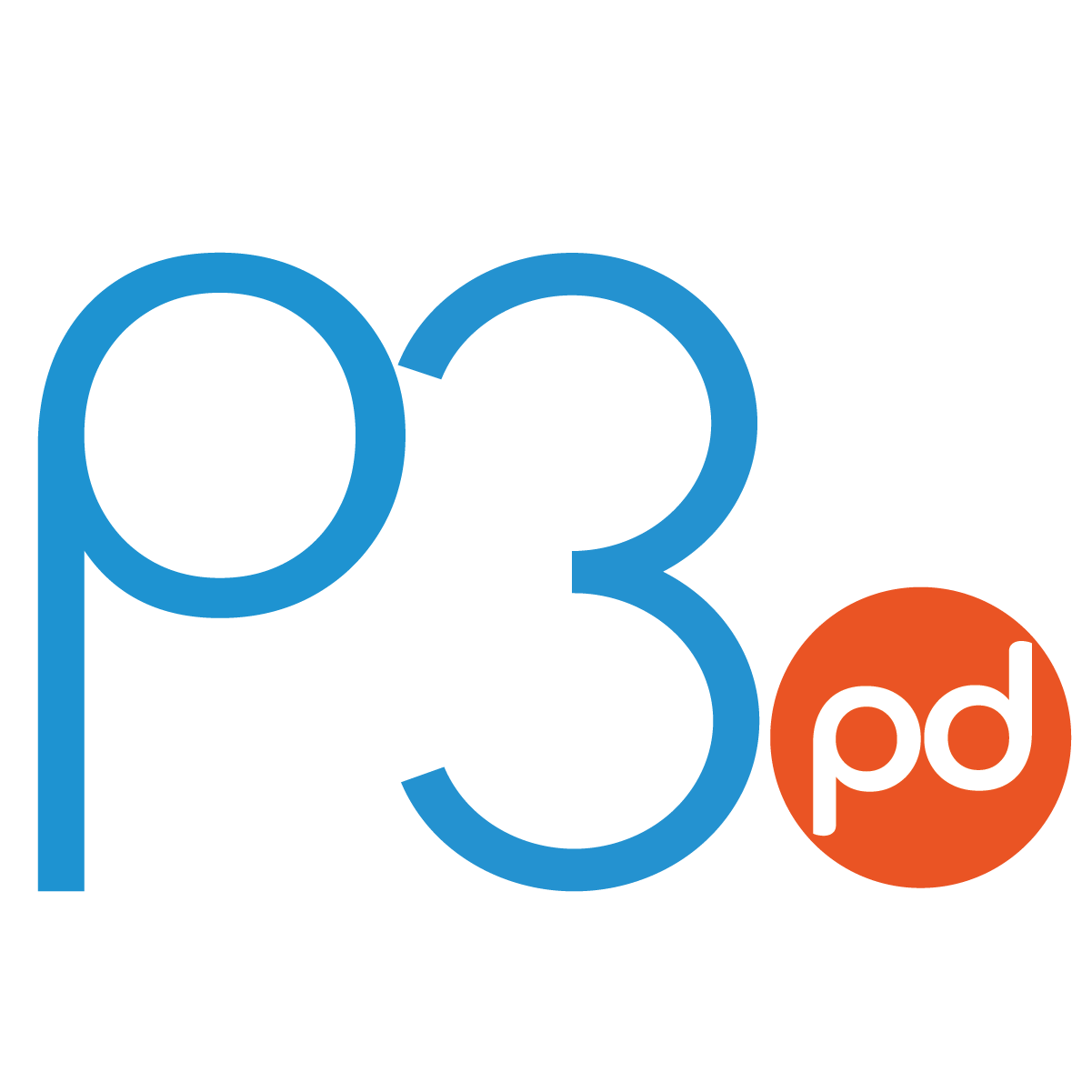
FROM PROTOTYPE
TO DESIGN CONCEPT
WHEN THE TECHNOLOGY WORKS, BUT THE PRODUCT ISN’T DEFINED
Many early-stage medical devices reach the same inflection point:
The technology works.
The system supports real use cases.
The prototype enables testing and iteration.
But the product itself is still undefined. Key questions remain:
What should the commercial device actually look like?
How should users interact with it?
What should be disposable vs. reusable?
How should the system communicate sterility and safety?
What architecture will support manufacturing and scale?
Before engineering the next version, teams need something critical – a clear product vision.
THE DEVICE: BMAX STEM CELL PROCESSING SYSTEM
BMAX, founded by spine surgeon Dr. Jeff Donner, is developing a system for same-session regenerative therapy.
The device enables clinicians to:
Extract a patient’s own stem cells (adipose or bone marrow)
Mechanically process the material
Reinject it into areas of chronic pain, within the same outpatient procedure
The system replaces manual, variable processes, such as syringe-based homogenization, with a more controlled and repeatable approach.
The existing prototype device, developed with P3PD, was highly effective for protocol development and testing and has allowed BMAX to demonstrate superior regenerative capacity in preclinical animal models. But it was never intended to represent a final, commercial product.
Read the case study covering P3PD’s development of the BMAX functional prototype.
THE CHALLENGE: FROM PROTOTYPE TO PRODUCT
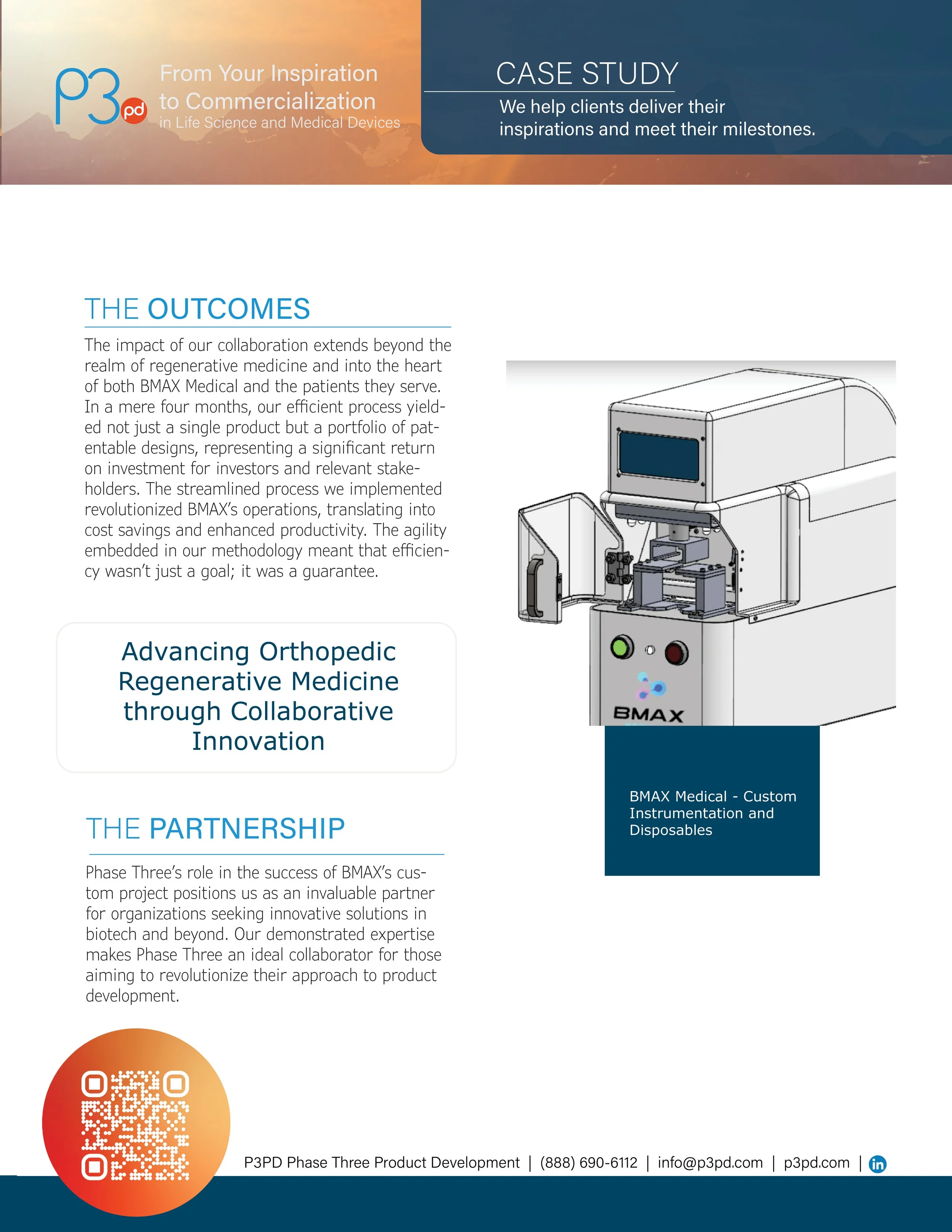
The current functional prototype system reflected its development purpose of providing a high-margin testbed for characterization:
Interchangeable components for testing
Bolted assemblies and exposed hardware
Limited cues for sterility and cleanability
No clear user interaction model
Moving forward required answering deeper questions:
How should a disposable cartridge system be designed?
What does safe, intuitive use look like in a clinical setting?
How should the system communicate cleanliness and sterility?
What should the next-generation form factor be?
These are not cosmetic decisions – they define the product itself.
OUR APPROACH: AN INDUSTRIAL DESIGN SPRINT
Rather than jumping straight into engineering, P3PD led an industrial design sprint to define the product direction first.
This sprint focused on three critical areas:
Product Architecture - Defining how the system should be structured:
• Reusable instrument
• Disposable processing cartridge
• Clear, intuitive docking interface
Human Factors - Designing for real clinical use:
• Glove-friendly interaction
• Reduced crevices and contamination traps
• Clear zones for user interaction
Form & Communication - Shaping how the device communicates its function:
• A unified, monolithic benchtop form
• Clear visual hierarchy
• Emphasis on the disposable system as the core interaction
This process resulted in conceptual product visualizations informed by engineering reality, not speculative or aesthetic-first design.
THE OUTCOME: A DEFINED PRODUCT DIRECTION
The sprint produced a set of visualized product concepts that clarified important aspects of the next-generation BMAX system.
A Unified Instrument: A simplified, monolithic enclosure that reduces visual complexity and focuses attention on key interaction points.
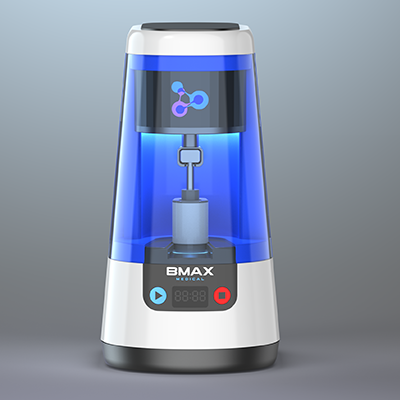
A Refined Disposable Interface: A cleaner, more intuitive front bay designed to:
Improve usability
Reinforce sterility
Clearly communicate cartridge docking
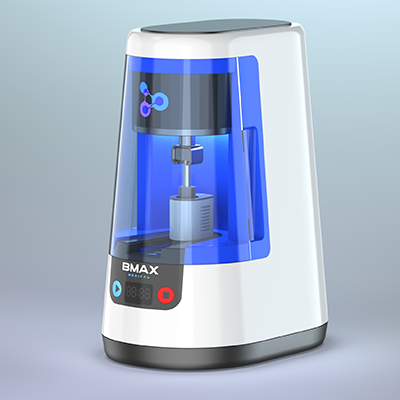
A Commercial-Ready Cartridge Concept: A redesigned disposable cartridge featuring:
Enclosed plastic housing
Elimination of exposed hardware
Orientation cues for correct insertion
Together, these elements transformed the system from a functional prototype into a cohesive product concept.
BEFORE
A functional prototype
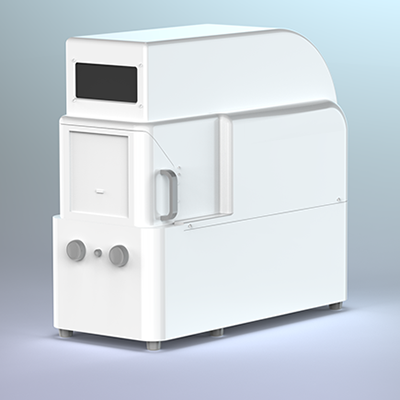
AFTER
An engineering-informed vision of the future product
WHY THIS STEP MATTERS
Industrial design sprints provide a critical bridge between innovation and execution.
By defining product architecture, user interactions, and system intent early, teams gain clarity before committing to engineering decisions. This upfront thinking helps:
Identify human factors and usability needs in real clinical contexts
Align founders, engineers, and stakeholders around a shared vision
Inform manufacturing, regulatory, and product strategy
Reduce downstream redesign, complexity, and cost
The conceptual product visualizations that emerge from this process are more than visuals, they are a working model of the product’s future state. The outputs serve as a foundation for:
Engineering development
Design for manufacturing
Regulatory planning
Brand and product positioning
Most importantly, they allow teams to move forward with confidence, knowing that the product has been thoughtfully defined before it is built.
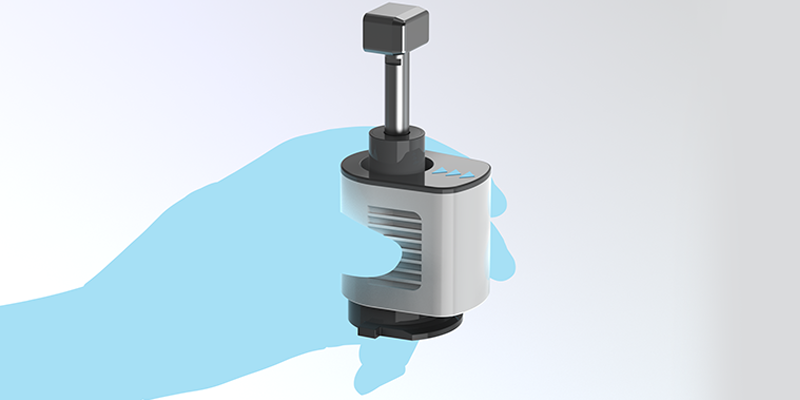
Usability Boosts
Large surfaces and texture give users more grip purchase.
Orientation cues help to establish correct grip orientation.
A streamlined aesthetic.
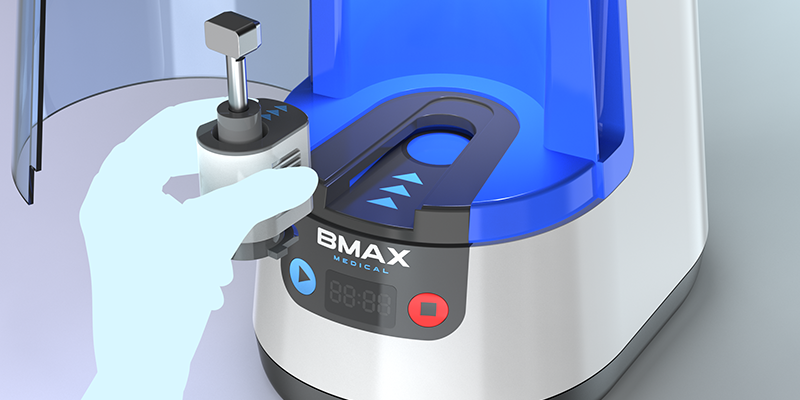
Usability Boosts
Orientation cues helps users orient cartridge
Cartridge “runway” with features that secure everything during the grind
Keyed coupling features with main drive mechanism
Lighting cues that reinforce device is loaded and ready
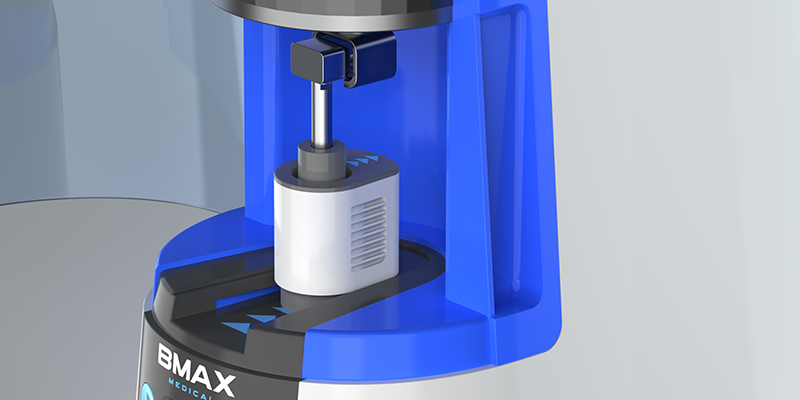
Human factors, usability and visual communication of the interaction of the disposable processing cartridge with the main BMAX system were part of the industrial design sprint and resulting future product concepts.
INDUSTRIAL DESIGN FOR MEDICAL DEVICES AND MORE
P3PD helps medtech, life science, and advanced technology companies translate functional prototypes into product-ready concepts.
Industrial design sprints are a key part of that journey. While just one component of P3PD’s broader capabilities, they provide outsized value by defining product architecture, usability, and system intent before engineering begins.
This early clarity helps teams avoid costly rework, align stakeholders, and move forward with confidence, ensuring the product that gets built is the right one.
Start defining the product your technology deserves.